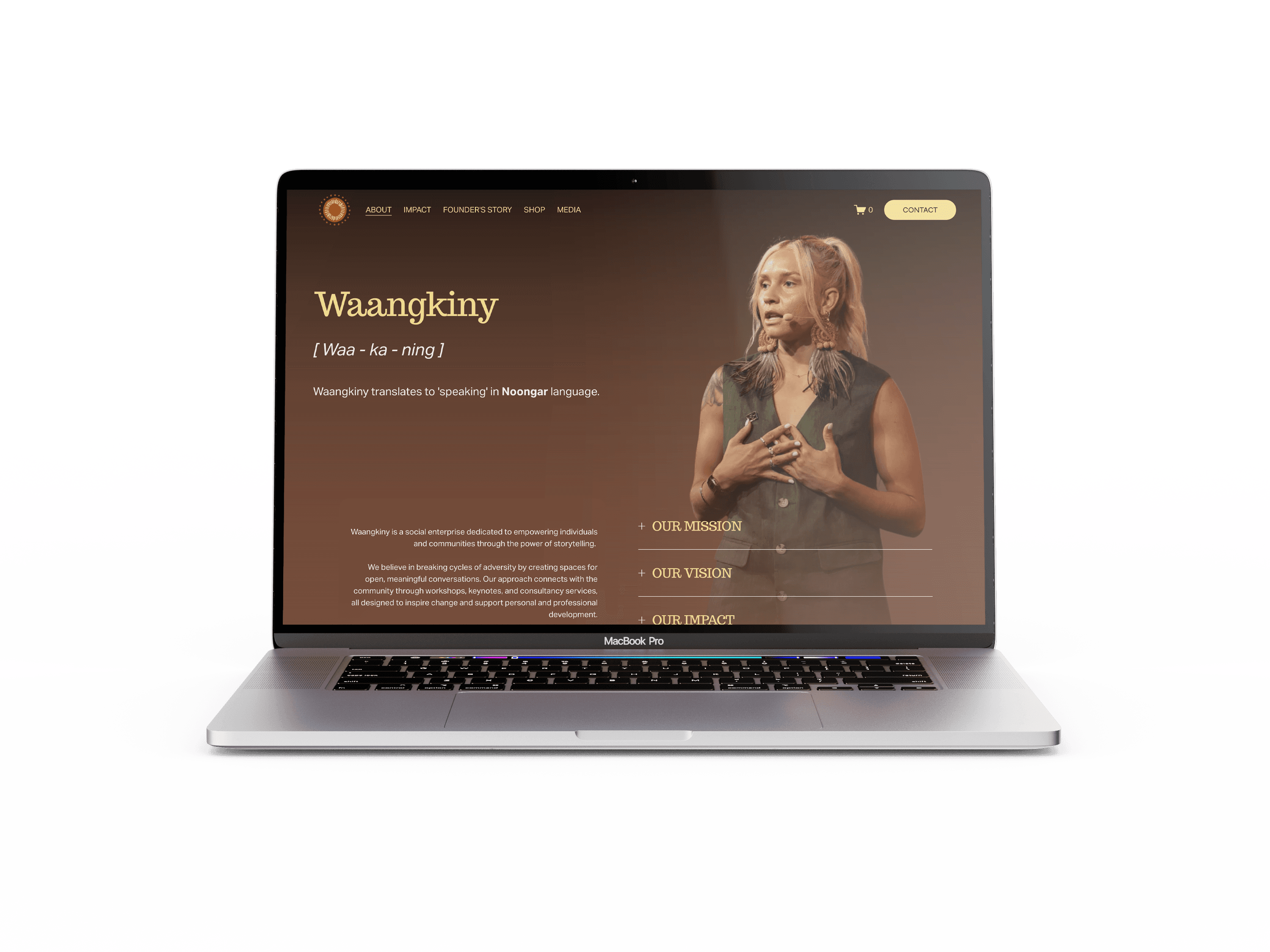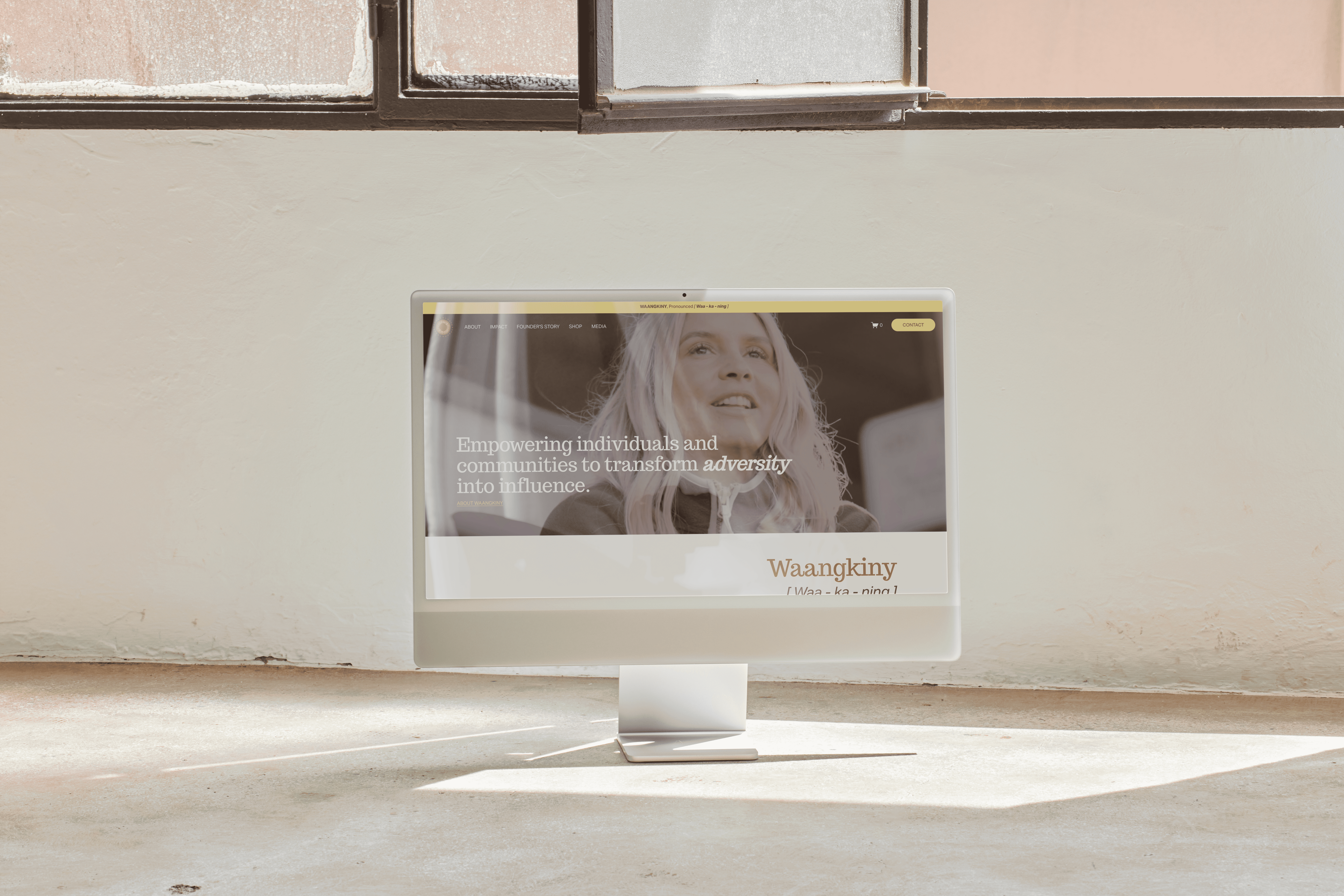
Working on Waangkiny was a project that meant a lot to me long before the website itself even began.
I had actually been encouraging Courtney for over a year to finally launch a digital presence for her work. From the moment I first came across her story, I knew she was someone I deeply wanted to collaborate with, not just because of what she does professionally, but because of the impact she has on the people around her.
Courtney has an incredibly powerful way of communicating. The way she speaks about identity, culture, leadership, healing, and human connection carries a level of honesty and presence that feels impossible to ignore. I genuinely believe her story and perspective deserve to be heard by as many people as possible.
When the project finally began, the intention was never simply to “build a website.”
It was about creating a digital space that felt aligned with the depth, warmth, and authenticity of who Courtney is in real life.
At the time, there wasn’t an existing online platform consolidating her work, story, speaking engagements, offerings, and broader impact. The challenge became creating a home for all of it in a way that felt intentional, elevated, and emotionally grounded without overcomplicating her message.
The entire direction of the website focused heavily on storytelling.
Rather than making the experience feel overly corporate or polished, we leaned into a more human and immersive approach, allowing Courtney’s voice, imagery, and presence to remain the central focus throughout the site. The design needed to create space for people to truly pause, listen, and connect with what she was saying.
What made this project especially meaningful was the level of trust involved once we stepped into the creative process together. Courtney’s work carries real emotional and cultural significance, so approaching the build with care and respect was incredibly important to me.
Projects like Waangkiny remind me that websites can become so much more than digital platforms.
Sometimes they become vessels for storytelling, education, representation, and impact. And when the person behind the brand has something genuinely important to say, the role of design becomes less about decoration and more about creating space for their voice to reach the people who need to hear it most.